
Experts Talk 2026
May 9, 2026
Research on Medical Device Development Based on Circulatory Control Theory
Speaker: Dr. Keita Saku
Head, Department of Circulatory Dynamics and Control, National Cerebral and Cardiovascular Center
Specially Appointed Director, Bio-Digital Twin Research Division
Dr. Keita Saku was the youngest ever recipient of the President’s Award of the Japan Agency for Medical Research and Development (AMED) at the 2nd Japan Medical Research and Development Awards. He is a leading expert in pressure–volume (PV) loop analysis and conducts research on the autonomic nervous system and cardiovascular hemodynamics.
Lecturer Profile
Dr. Keita Saku joined the Department of Cardiology at Kyushu University Hospital in 2009. After engaging in clinical practice, he began his research as a graduate student in 2010. He received his Ph.D. in 2015 and subsequently worked as a Research Fellow and Specially Appointed Lecturer. He is currently Head of the Department of Circulatory Dynamics and Control and Specially Appointed Director of the Bio-Digital Twin Research Division at the National Cerebral and Cardiovascular Center.
Based on his research on circulatory regulation through autonomic nervous system control and clinical cardiovascular hemodynamics, Dr. Saku promotes hemodynamics education and the development of Japan-origin medical devices.
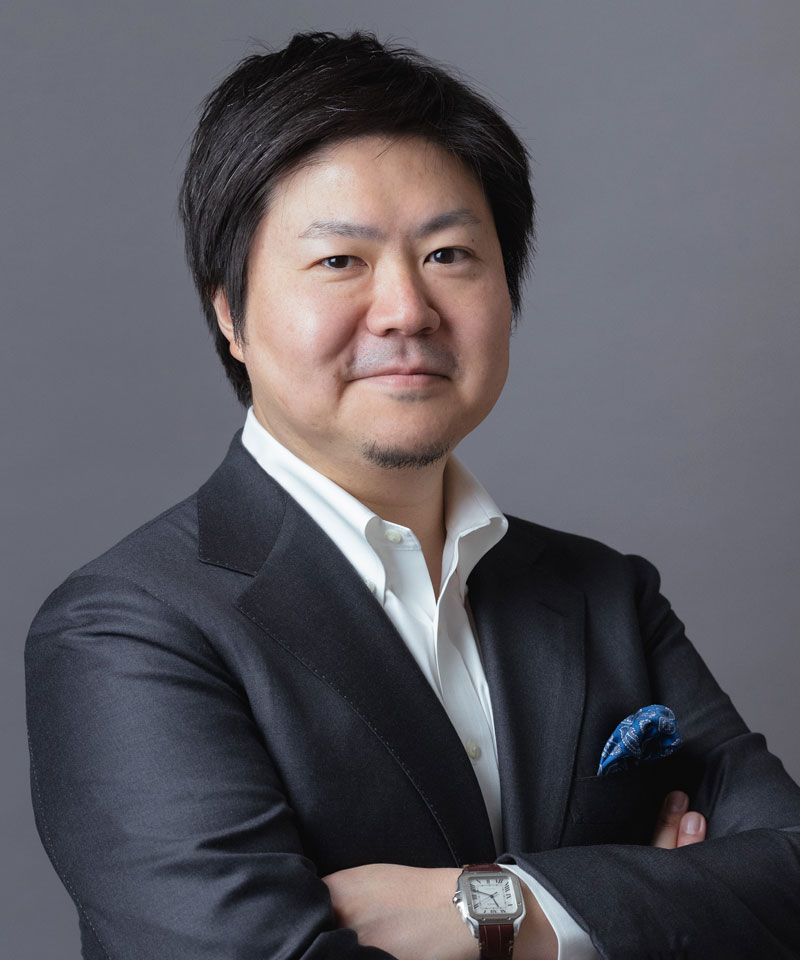
Lecturer Profile
Dr. Keita Saku joined the Department of Cardiology at Kyushu University Hospital in 2009. After engaging in clinical practice, he began his research as a graduate student in 2010. He received his Ph.D. in 2015 and subsequently worked as a Research Fellow and Specially Appointed Lecturer. He is currently Head of the Department of Circulatory Dynamics and Control and Specially Appointed Director of the Bio-Digital Twin Research Division at the National Cerebral and Cardiovascular Center.
Based on his research on circulatory regulation through autonomic nervous system control and clinical cardiovascular hemodynamics, Dr. Saku promotes hemodynamics education and the development of Japan-origin medical devices.
Lecture Overview
Understanding circulatory dynamics accurately and “controlling” them as a therapeutic strategy is fundamental to the treatment and management of cardiovascular diseases, from acute circulatory failure to chronic heart failure. Our group integrates circulatory physiology, systems control engineering, and digital twin technologies to develop mathematical models based on circulatory theory, create high-precision circulatory simulation environments, and translate these achievements into the development of circulatory control devices.
A key focus is the precise measurement of pressure, volume, and flow to construct circulatory models representing normal physiology, pathological states, and therapeutic interventions. This approach enables the establishment of simulation technologies for various treatments and has recently contributed to the development of automated therapeutic systems. We also focus on the autonomic nervous system, the central regulator of circulation, working on autonomic nerve ablation therapies and neurostimulation device development. Furthermore, by combining physics-based mathematical models with AI and integrating real-world clinical data, we are actively developing cardiovascular digital twins and software as a medical device (SaMD).
We hope this lecture will provide insight into medical devices that will play a significant role in the not-so-distant future.
Event Details
Date & Time
Saturday, May 9, 2026
17:00 – 18:30 (Japan time)
Lecture 17:00 – 18:00
Q&A Session 18:00 – 18:30
Venue
Grand Green Osaka – JAMBASE
(Entrance: JAMBASE 4F)
6-38 Ofukacho, Kita-ku, Osaka, Japan
> Google MAP
Title
Research on Medical Device Development Based on Circulatory Control Theory
Speaker
Dr. Keita Saku
Head, Department of Circulatory Dynamics and Control, National Cerebral and Cardiovascular Center
Specially Appointed Director, Bio-Digital Twin Research Division
Format
Hybrid (Zoom + in-person)
Exclusive to Liamics Research Association members
If you are interested in joining the Liamics Research Association, please see the page below.
JOIN US